


You know the routine. You hide the pill in peanut butter. Your dog eats the peanut butter and leaves the pill on the floor. You try a pill pocket. Same result. If you have a cat, the situation is even less dignified — for both of you.
Getting pets to take medication is one of the most frustrating parts of caring for a sick animal. But the problem isn't always the pet. Sometimes, the medication itself isn't the right fit — wrong form, wrong dose, wrong flavor, or simply not manufactured anymore. That's where veterinary compounding comes in.
At James McCoy's Drug Store, our pharmacists work directly with your veterinarian to prepare custom medications made specifically for your pet — in a form they'll actually accept. Here's what you need to know.
What Is a Compounded Pet Medication?
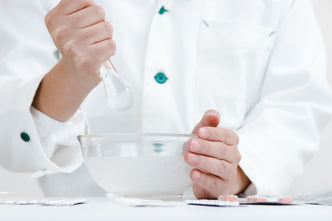
Think of a compounded pet medication as a custom recipe. Instead of pulling a pre-made drug off the shelf, a licensed compounding pharmacist prepares the medication from scratch — or modifies an existing formulation — based on a prescription written specifically for your animal.
That prescription might call for a lower dose than any commercial product offers, a chicken-flavored liquid suspension instead of a capsule, or a transdermal gel that absorbs through the ear skin so you never have to fight your cat with a pill organizer again.
Under 503A compounding regulations, every preparation is patient-specific. That means the medication is made for your named pet, based on your veterinarian's prescription. Compounded preparations are not FDA-approved finished drugs, but they are prepared under strict USP standards by licensed pharmacists — with your vet's guidance directing every decision.
Why Would a Veterinarian Prescribe a Compounded Medication?
Veterinarians turn to compounding pharmacies like James McCoy's Drug Store for several practical reasons. Most of them come down to one simple truth: commercially available medications weren't designed with every animal in mind.
Common reasons your vet might write a compound prescription include:
- The commercial drug has been discontinued or is on backorder. Supply chain issues affect veterinary medications too, and a compounding pharmacy can step in to keep your pet's treatment on track.
- The dose doesn't exist commercially. A 5-pound Chihuahua needs a very different dose than a 90-pound Labrador. Compounding allows precise dose adjustment for your pet's exact weight and condition.
- Your pet needs a different formulation. Pills can be reformulated into flavored liquids, chewable treats, or transdermal gels — whatever your pet is most likely to accept.
- Your pet has sensitivities. Dyes, fillers, or certain preservatives found in commercial drugs can cause reactions in some animals. Compounding allows those ingredients to be removed.
- The species isn't well-served commercially. Birds, reptiles, rabbits, and other small animals are often left out of standard pharmaceutical manufacturing. Compounding fills that gap.
Your veterinarian determines whether a compounded medication is appropriate — our pharmacists are here to prepare it exactly as prescribed.
What Animals Can Receive Compounded Medications?
Veterinary compounding isn't just for dogs and cats, though they are the most common patients. Our pharmacists can prepare compounded medications for a range of animals, including:
- Dogs — pain management, antibiotics, behavioral medications, thyroid support, and more
- Cats — methimazole for hyperthyroidism (often as a transdermal ear gel), antibiotics, anti-nausea medications
- Birds — precise micro-dosing in liquid or powder form
- Reptiles — species-specific formulations where commercial options simply don't exist
- Small mammals — rabbits, guinea pigs, ferrets, and similar pets that fall outside standard pharmaceutical dosing
All compounded pet medications require a valid veterinarian-client-patient relationship (VCPR) and a prescription from a licensed veterinarian. Your vet is the starting point — we work from there.
Common Reasons Pets Need Compounded Medications
Certain health conditions in animals frequently call for compounded preparations. While your veterinarian will determine what's right for your pet's specific situation, compounded medications are commonly used in these categories:
- Thyroid conditions — Hyperthyroidism is extremely common in older cats, and many respond better to a transdermal methimazole gel applied to the inner ear than to an oral tablet
- Pain management — Dose-specific anti-inflammatory and pain preparations for animals with sensitivities to standard commercial NSAIDs
- Behavioral and anxiety medications — Precise, palatable doses for pets who need daily oral medication to manage anxiety or compulsive behaviors
- Infections — Antibiotics reformulated into a flavor or form the animal will actually consume
- Skin and ear conditions — Topical preparations customized to the affected area and species
These descriptions are educational — your veterinarian evaluates your pet and prescribes what's clinically appropriate. Our role is to prepare that prescription with care and precision.
How Flavoring Makes a Real Difference
One of the most practical benefits of veterinary compounding is flavoring. It sounds simple, but it changes everything.
A cat that spits out a standard tablet might readily accept a tuna-flavored liquid. A dog who refuses a bitter pill may take a bacon-flavored chewable without a second thought. When a transdermal gel is the delivery method, there's no swallowing required at all — you apply it to the inner ear skin and go about your morning.
At James McCoy's Drug Store, our compounding pharmacists can prepare medications in flavored suspensions, liquids, gels, and other forms with your pet's preferences in mind. Flavor options commonly include chicken, beef, bacon, fish, and more — because a medication your pet won't take isn't a medication that's helping.
This kind of flexibility is something mass-manufactured drugs simply can't offer. It's one of the reasons veterinarians and pet owners in Abilene have turned to independent compounding pharmacies for decades.
How to Get a Compounded Medication for Your Pet
The process is more straightforward than most pet owners expect. Here's how it works:
- Talk to your veterinarian. Describe the challenge — whether it's difficulty administering the medication, a discontinued drug, or a dose that doesn't exist commercially. Your vet will determine if a compounded preparation is appropriate.
- Your vet writes the prescription. The prescription specifies the medication, dose, form, and flavor — tailored to your specific pet.
- The prescription comes to us. Your vet can send the prescription directly to James McCoy's Drug Store, or you can bring it in to any of our three Abilene locations.
- We prepare and dispense. Our pharmacists compound the medication according to the prescription and let you know when it's ready.
- Pick up or arrange delivery. We're available at our North, South, and Midtown Abilene locations, and we're happy to discuss the best option for your situation.
Have questions before your vet appointment? Schedule a consultation with our pharmacists — we're glad to talk through what's possible and help you have a more informed conversation with your vet.
Why Choose James McCoy's Drug Store for Your Pet's Compounded Medication?
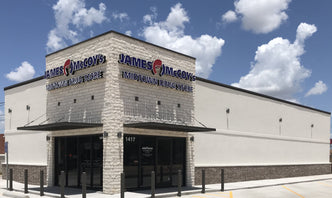
James McCoy's Drug Store has been serving the Abilene community since 1998. We're not a mail-order warehouse — we're your neighbors, and we know the difference that personal service makes.
When you bring a veterinary compound prescription to us, you're working with licensed pharmacists who take the time to get it right. We coordinate directly with your veterinarian, prepare medications under USP compounding standards, and are available at three Abilene locations — North on Judge Ely Boulevard, South on Antilley Road, and Midtown on Willis Street — to answer your questions at pickup or by phone.
Our goal is simple: to make sure your pet gets the medication they need, in a form that actually works, prepared by a pharmacist you can talk to.
Frequently Asked Questions
Can a compounding pharmacy make medication for my pet?
Yes. A licensed compounding pharmacy can prepare custom medications for animals based on a prescription from your veterinarian. The prescription specifies the drug, dose, form, and any flavoring — and the pharmacist prepares it specifically for your pet.
Why would my vet prescribe a compounded medication instead of a commercial one?
Veterinarians prescribe compounded medications when a commercial option doesn't exist, has been discontinued, needs dose adjustment, or needs to be reformulated into a more acceptable form. Flavoring, allergen removal, and species-specific dosing are common reasons.
Is compounded pet medication safe?
Compounded medications for animals are prepared by licensed pharmacists under USP standards and require a prescription from a licensed veterinarian. As with any medication, your veterinarian oversees the treatment plan and monitors your pet's response. Always follow your vet's guidance.
How do I get a compounded medication for my dog or cat?
Start with your veterinarian. If they determine a compounded medication is appropriate, they'll write a prescription that comes to a compounding pharmacy like James McCoy's Drug Store. From there, we prepare and dispense the medication — usually available for pickup at one of our three Abilene locations.
Does my vet need to write a prescription for compounded pet medications?
Yes. All compounded pet medications require a valid prescription from a licensed veterinarian. This is required by law under 503A compounding regulations and ensures your pet's medication is appropriate for their specific condition, weight, and health history.
Your Pet Deserves Medication That Fits Them
Every animal is different — and their medications should be too. Veterinary compounding makes it possible to give your pet the treatment they need in a form they'll actually accept, prepared by pharmacists who work closely with your veterinarian every step of the way.
If your pet is struggling with a current medication — or if your vet has mentioned compounding as an option — we're here to help. Schedule a consultation with the team at James McCoy's Drug Store, or stop by any of our three Abilene locations to talk with one of our pharmacists.
Hometown care for every member of your family — including the four-legged ones.
This article is for informational purposes only and is not medical or veterinary advice. Compounded medications for animals require a prescription from a licensed veterinarian. Talk to your veterinarian and the team at James McCoy's Drug Store about whether a compounded preparation is appropriate for your pet's situation.