



Imagine your doctor prescribes a medication — but it's only available in a tablet form your child refuses to swallow, or in a strength that's too high for your needs, or it contains a dye that triggers a reaction every time you take it. A standard pharmacy can fill what the manufacturer made. A compounding pharmacy can make something different.
Compounding has been part of pharmacy practice longer than mass-manufactured medications have existed. For most of pharmacy history, making medications from scratch was the job. Today, the majority of prescriptions are filled from commercially produced drugs — but there's a meaningful group of patients whose needs those products simply don't meet. That's where compounding comes in.
This guide explains what compounding pharmacies do, how the process works, who tends to benefit most, and what to look for when choosing one. The pharmacists at James McCoy's Drug Store have been serving the Abilene community from three locations since 1998 — and these are the same questions they answer every week at the counter.
What Is a Compounding Pharmacy?
A compounding pharmacy is a licensed pharmacy where trained pharmacists create customized medications tailored to the specific needs of an individual patient. Rather than dispensing a pre-manufactured, mass-produced drug, compounding pharmacists prepare medications from ingredients — adjusting the dose, dosage form, or formulation based on a prescription written by a licensed healthcare provider.
Compounding is regulated by state pharmacy boards and performed according to standards set by the United States Pharmacopeia (USP). Every compounded preparation requires a valid prescription.
What's the Difference Between a Compounding Pharmacy and a Regular Pharmacy?
Both types of pharmacy require a valid prescription, and both are staffed by licensed pharmacists. The core difference is what happens after the prescription arrives.
A standard retail pharmacy dispenses medications that were manufactured off-site, in standardized doses and forms, by a pharmaceutical company. A compounding pharmacy prepares the medication on-site, tailored to that specific patient's prescription.
Here's a simple way to think about it: a standard pharmacy is like a restaurant that serves from a fixed menu. A compounding pharmacy is like a kitchen that can adjust the recipe — changing the dose, swapping the delivery form, removing an ingredient you react to, or combining two medications into a single preparation your provider has approved.
Both require a prescription from your healthcare provider. Neither diagnoses your condition or determines your treatment — that remains the role of your doctor or nurse practitioner.
How Does the Compounding Process Work?
When your provider writes a compounded prescription, here's what typically happens:
- The prescription arrives. Your pharmacist receives the order from your provider — either electronically or on paper. It specifies the medication, strength, dosage form, and any special instructions.
- The pharmacist reviews the formulation. Before anything is prepared, the pharmacist verifies the prescription, checks for interactions, and confirms the requested formulation is appropriate for the patient.
- Ingredients are measured and prepared. Using pharmaceutical-grade ingredients, the pharmacist compounds the preparation — whether that's a cream, capsule, lozenge, liquid, or another form.
- Quality checks are performed. Compounded preparations are checked for accuracy, potency, and sterility (where applicable) before dispensing.
- The medication is dispensed with counseling. Your pharmacist explains how to use the preparation correctly — dosing, storage, timing, and what to watch for.
James McCoy's Drug Store operates as a 503A pharmacy, which means every preparation is made for a specific patient based on a specific prescription. This is distinct from 503B outsourcing facilities, which compound in bulk without patient-specific prescriptions for distribution to healthcare facilities. The 503A model means your medication is made for you — not stockpiled for general sale.
Non-sterile preparations (capsules, creams, most oral suspensions) follow USP <795> standards. Sterile preparations (injectables, eye drops) follow the more rigorous USP <797> standards, which govern cleanroom conditions, testing, and beyond-use dating.
Who Might Benefit From a Compounding Pharmacy?
This is the question worth sitting with — because compounding isn't for every patient, but for the right patient, it can make the difference between a medication that actually works for them and one that doesn't.
You might benefit from a compounding pharmacy if:
- Your medication isn't available in the right dose. Your provider may need a strength that isn't commercially manufactured, or may want to start you at a lower dose than what's available off the shelf.
- You need a different delivery form. A tablet your child won't take can often be reformulated as a flavored liquid or chewable. A capsule that upsets your stomach may be available as a transdermal cream.
- You have an allergy or sensitivity to inactive ingredients. Commercial medications often contain dyes, lactose, gluten, or preservatives. Compounding can remove those ingredients from your preparation.
- Your medication has been discontinued or is on backorder. When commercial supply runs short, a compounding pharmacy may be able to prepare the medication with a provider's prescription.
- You're managing hormone-related symptoms. Patients working with a provider on personalized hormone therapy — including bioidentical hormone replacement therapy (BHRT) — often need customized doses and delivery forms that commercial products don't offer.
- You take Low Dose Naltrexone. LDN is prescribed at doses well below what commercial formulations provide. Compounding makes this possible under a provider's direction.
- Your pet needs a custom medication. Animals frequently need different doses, palatable flavors, or alternative forms of medications that aren't commercially available for their species.
- Your provider has recommended a specialty preparation. ENT preparations, Betahistine capsules, and other specialty compounds often aren't available from commercial manufacturers.
If any of these situations sounds familiar, it's worth a conversation with your provider — and with our team.
Does Insurance Cover Compounded Medications?
Coverage varies by plan, and there's no single answer that applies to everyone. Some insurance plans cover 503A compounded medications when they're medically necessary and prescribed by a licensed provider. Others cover them partially or not at all.
The most reliable approach is to contact your insurance provider directly and ask about coverage for compounded prescriptions. Your pharmacist can also help you understand what information your insurer may need. At James McCoy's Drug Store, our team is glad to walk through your options with you — coverage questions don't have to be a barrier to getting the medication your provider recommends.
Can You Trust a Compounding Pharmacy?
It's a fair question, and a good one to ask. Quality in compounding varies — as it does in any area of healthcare — and it's worth knowing what markers distinguish a pharmacy you can rely on.
Here's what to look for:
- State licensure. Every legitimate compounding pharmacy is licensed by its state pharmacy board. James McCoy's Drug Store holds active Texas pharmacy licenses across all three Abilene locations (License #18890, #21975, #33219).
- USP compliance. Reputable compounding pharmacies follow USP <795> and <797> standards, which govern ingredient quality, preparation procedures, cleanroom conditions, and testing.
- Provider collaboration. A trustworthy compounding pharmacy works with your healthcare provider — not around them. Every preparation at JM Drug Store is made pursuant to a prescription from your licensed provider.
- Transparency with patients. Your pharmacist should be able to explain what's in your preparation, how it was made, and how to use it correctly.
- Years of community service. James McCoy's Drug Store has been an independent part of the Abilene community since 1998. That kind of longevity is built on trust — patient by patient, provider by provider.
The right compounding pharmacy is one your provider trusts enough to send a prescription to — and one whose pharmacists take the time to explain your medication to you.
Compounding Services at James McCoy's Drug Store in Abilene, TX
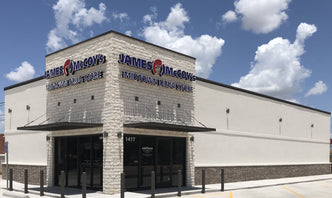
James McCoy's Drug Store offers 503A patient-specific compounding from three Abilene locations — North (839 N. Judge Ely Blvd), South (1725 Antilley Rd), and Midtown (1417 S Willis St).
Current compounding specialties include:
- Bioidentical Hormone Replacement Therapy (BHRT) — personalized hormone preparations as prescribed by your healthcare provider
- Low Dose Naltrexone (LDN) — compounded to provider-specified doses under a valid prescription
- Betahistine Capsules — a specialty preparation not commercially available in the United States
- ENT Capsules — customized ear, nose, and throat preparations
- Veterinary Compounding — custom medications for companion animals, as prescribed by a licensed veterinarian
- General Compounding — including pediatric formulations, allergen-free preparations, and other patient-specific needs
Our pharmacists work closely with your provider to ensure every preparation is appropriate for your specific situation. If you've received a compounded prescription — or if your provider has mentioned compounding as an option — we're here to help.
A Final Word
If you've ever felt like a commercially available medication wasn't quite the right fit — wrong dose, wrong form, wrong ingredient list — compounding may be worth a conversation with your provider. It's not a workaround or a fringe option; it's a well-regulated, time-tested part of pharmacy practice that's simply better known in some healthcare circles than others.
The pharmacists at James McCoy's Drug Store are ready to answer your questions, work alongside your provider, and help you understand whether a compounded preparation makes sense for your situation. We've been doing this in Abilene since 1998, and we're not going anywhere.
Already have a compounded prescription at another pharmacy? Transfer it to JM Drug Store →
Frequently Asked Questions
What is a compounding pharmacy?
A compounding pharmacy is a licensed pharmacy where pharmacists create customized medications for individual patients based on a prescription from a licensed healthcare provider. Compounding allows adjustments to dose, dosage form, or ingredients that standard commercial medications don't offer — all prepared under USP quality standards.
Who needs a compounding pharmacy?
Patients who may benefit from compounding include those who need a medication in a different dose or form, who have allergies to ingredients in commercial products, who take Low Dose Naltrexone or personalized hormone therapy, or whose providers have prescribed medications not available commercially — including specialty ENT preparations, pediatric formulations, and veterinary medications.
How does the compounding process work?
A compounding pharmacist receives a patient-specific prescription from a licensed provider, verifies the formulation, measures pharmaceutical-grade ingredients, prepares the medication according to USP standards, performs quality checks, and dispenses the preparation with patient counseling. At a 503A pharmacy like James McCoy's Drug Store, every preparation is made for a specific patient — not produced in bulk.
Does insurance cover compounded medications?
Coverage varies by plan. Some insurance plans cover 503A compounded medications when medically necessary and prescribed by a licensed provider; others offer partial coverage or none. Contacting your insurer directly is the most reliable way to find out. The team at James McCoy's Drug Store can help you understand what your insurer may need.
Can you trust a compounding pharmacy?
Yes — when the pharmacy is licensed by its state board, follows USP <795> and <797> standards, requires a valid prescription for every preparation, and collaborates closely with prescribing providers. James McCoy's Drug Store holds active Texas pharmacy licenses at all three Abilene locations and has served the community since 1998.
This article is for informational purposes only and is not medical advice. Compounded medications require a prescription from a licensed healthcare provider. Talk to your provider and the team at James McCoy's Drug Store about whether a compounded preparation is appropriate for your situation.