



Your doctor just handed you a prescription unlike any you've filled before. Maybe it's for a hormone preparation customized to your lab results. Maybe it's a medication in a liquid form your child can actually swallow, or a compounded treatment your veterinarian recommends for your dog. You pull out your phone and search "compounding pharmacy near me" — and suddenly you're looking at a list of options with very little guidance on how to choose.
That moment is exactly what this guide is for. Compounding pharmacies aren't all the same, and knowing what to look for can make a real difference in the quality, safety, and effectiveness of your prescription. Here's what patients in Abilene, TX — and anywhere else — should understand before they fill a compounded prescription.
What Is a Compounding Pharmacy?
A compounding pharmacy is a pharmacy that creates medications to order, tailored specifically to one patient's needs based on a prescription from their healthcare provider. Instead of dispensing a mass-manufactured tablet in a standard dose, a compounding pharmacist prepares a formulation designed around what you need — the right dose, the right form, the right ingredients.
That's the essential difference between a compounding pharmacy and a conventional retail or chain pharmacy. A chain pharmacy's job is to stock and dispense commercially available medications. A compounding pharmacy's job is to make something that doesn't exist off the shelf — or to adjust something that does.
Why do some patients need compounded medications? Common reasons include:
- A commercially available drug has been discontinued or is on backorder
- A patient has allergies to dyes, fillers, or preservatives in a standard formulation
- A child needs a smaller dose or a flavored liquid instead of a tablet
- A provider wants to combine two medications into one preparation
- A patient needs a topical cream or specialized delivery form not available commercially
Understanding 503A vs. 503B Compounding Pharmacies
You may see the term 503A when researching compounding pharmacies — and it matters. A 503A pharmacy compounds medications for individual patients based on a valid prescription from a licensed prescriber. Every preparation is patient-specific. James McCoy's Drug Store operates as a 503A pharmacy, which means every compounded medication prepared here is made for a specific patient, with a specific prescription, under the supervision of a licensed pharmacist.
503B pharmacies (also called "outsourcing facilities") operate on a larger scale, producing batches of compounded medications without patient-specific prescriptions. They serve hospitals and healthcare facilities rather than individual patients walking in with a prescription. If you're a patient with a prescription from your provider, a 503A pharmacy is what you're looking for.
What Types of Medications Can Be Compounded?
The range is broader than most patients expect. Prescription compounding services can prepare medications across many therapeutic areas — always based on a provider's prescription and always customized to the individual patient.
Common categories include:
- Hormone preparations (BHRT): Bioidentical hormone replacement therapy, compounded under the supervision of a licensed healthcare provider, can be tailored to a patient's specific hormone levels and delivery preferences — creams, troches, capsules, and more.
- Low Dose Naltrexone (LDN): LDN is prescribed at doses not available in commercially manufactured formulations. A compounding pharmacist can prepare the precise dose your provider orders, in a form that works for your routine.
- ENT and allergy preparations: Specialty ENT capsules and other ear, nose, and throat compounds address needs that standard medications can't always meet.
- Betahistine: Not commercially available in the United States, Betahistine is prescribed by some providers for vestibular conditions. Compounding pharmacies can prepare it as directed by a licensed prescriber.
- Veterinary compounding: Pets often need medications in doses or flavors that commercial products don't offer. Compounded medications for animals are prepared as prescribed by a licensed veterinarian.
- Pediatric medications: Children frequently need lower doses or alternative formulations — flavored liquids, smaller capsules — that make treatment more manageable.
Your provider writes the prescription. The compounding pharmacist customizes the preparation to meet it.
How to Find a Reputable Compounding Pharmacy Near You
Not every pharmacy that calls itself a compounding pharmacy operates at the same standard. When you're evaluating your options, these five questions can help you identify a pharmacy worth trusting.
- Are they a licensed 503A compounding pharmacy? Look for a pharmacy that holds active state pharmacy licenses and operates as a 503A compounder. JM Drug Store holds active pharmacy licenses across all three Abilene locations (North: #18890, South: #21975, Midtown: #33219).
- Do they compound under USP standards? Reputable compounding pharmacies follow United States Pharmacopeia (USP) guidelines — including USP <797> for sterile preparations and USP <800> for hazardous drug handling. Ask directly whether the pharmacy adheres to these standards.
- Is a licensed pharmacist overseeing every preparation? Every compounded preparation should be reviewed and approved by a registered pharmacist (R.Ph.) or Doctor of Pharmacy (PharmD). At JM Drug Store, James McCoy, R.Ph., leads a team of experienced pharmacists who are hands-on with every compounded prescription.
- Can they collaborate with your provider? A good compounding pharmacy works with your healthcare provider, not independently of them. That means clear communication, the ability to discuss formulation options, and a commitment to preparing your prescription exactly as your provider intends.
- What is their turnaround time? Ask about preparation timelines, especially for complex formulations. Most patient-specific compounded prescriptions are ready within 24–48 hours; some specialty preparations may take a few business days.
If you're in Abilene or anywhere in the surrounding Big Country area, here's what to know about working with a local compounding pharmacist — and why the relationship matters.
Why Patients in Abilene Choose a Local Compounding Pharmacist
Mail-order compounding has its place, but there's something a local pharmacy can offer that a fulfillment center can't: a pharmacist who actually knows you.
When you fill a compounded prescription at James McCoy's Drug Store, you're not a patient ID number in a queue. You're a person with a specific health situation, and you can sit down — or pick up the phone — and talk through your prescription with a pharmacist who has time to explain it. That direct relationship matters, especially with medications that may be new to you or that require a particular routine to work well.
There are practical advantages too:
- Fast, local turnaround. No waiting for a package to ship. Your preparation is ready when it's ready, and you can pick it up in person at whichever location is most convenient.
- In-person consultations. Have questions about your BHRT preparation, your LDN dose, or how to use a topical compounded cream? Our pharmacists are here to walk through it with you.
- Provider coordination. JM Drug Store works closely with local prescribers to make sure your compounded prescription is prepared exactly as your provider intends.
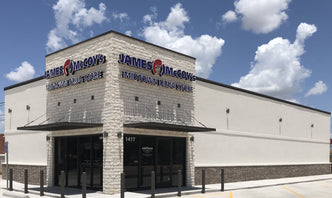
- Three Abilene locations. Whether you're in North Abilene (839 N. Judge Ely Blvd), South Abilene (1725 Antilley Rd), or Midtown (1417 S Willis St), there's a JM Drug Store nearby.
Patients who have received a compounded prescription from a provider in the Abilene area — whether for BHRT, LDN, a pediatric formulation, ENT preparation, or a veterinary compound — have a locally rooted option that has been serving this community since 1998.
What to Expect When You Fill a Compounded Prescription
- Your provider writes the prescription. Compounded medications require a valid prescription from a licensed healthcare provider. The prescription specifies the active ingredient, dose, dosage form, and any other formulation details.
- You contact the pharmacy. Bring your prescription to any JM Drug Store location, or have your provider send it directly to us. You can also initiate a consultation to discuss your needs before your prescription arrives.
- The pharmacist reviews and prepares your prescription. Our team confirms the formulation, sources pharmaceutical-grade ingredients, and prepares your medication according to USP standards and your provider's exact specifications.
- You pick up your medication or arrange delivery. Most compounded preparations are ready within 24–48 hours. Delivery is also available for patients who prefer it.
- Your pharmacist answers your questions. Whether it's about how to take your medication, what to expect, or how to store it, our pharmacists are here for you at pickup and beyond.
A note on insurance: Coverage for compounded medications varies by insurance plan and by the specific formulation. Some plans cover patient-specific compounded preparations when a valid prescription is on file; others may not. Our team can help you understand your options and work through the details with you.
Frequently Asked Questions About Compounding Pharmacies
Do I need a prescription to get a compounded medication?
Yes. A valid prescription from a licensed healthcare provider is required for all compounded medications at a 503A pharmacy. A pharmacist cannot compound a patient-specific medication without one. If your provider recommends compounding, they will write the prescription and can send it directly to the pharmacy of your choice.
What is the difference between a 503A and a 503B compounding pharmacy?
A 503A pharmacy compounds medications for individual patients based on a valid prescription — every preparation is patient-specific. A 503B pharmacy (also called an outsourcing facility) produces compounded medications in larger batches for healthcare facilities, without patient-specific prescriptions. If you're a patient with a prescription from your provider, you're looking for a 503A pharmacy.
Does insurance cover compounded prescriptions?
It depends on your insurance plan and the specific medication. Some plans cover compounded preparations when a valid prescription is on file and the medication meets coverage criteria. Others treat compounded medications differently than commercially manufactured drugs. The team at JM Drug Store can help you navigate your coverage and discuss payment options.
How long does it take to fill a compounded prescription?
Most patient-specific compounded prescriptions are prepared within 24–48 hours of receiving the prescription. More complex formulations — or preparations that require specialty sourcing — may take 3–5 business days. Our team will give you an accurate timeline when you drop off or call in your prescription.
Can a compounding pharmacy make medications for my pet?
Yes. Veterinary compounding is one of our specialty services at JM Drug Store. Pets often need doses, flavors, or delivery forms that commercial medications can't provide. All veterinary compounds are prepared as prescribed by a licensed veterinarian.
Is there a compounding pharmacy near me in Abilene, TX?
Yes. James McCoy's Drug Store has three locations serving the Abilene community: North (839 N. Judge Ely Blvd), South (1725 Antilley Rd), and Midtown (1417 S Willis St). Our pharmacists are available to answer questions, discuss your compounded prescription, or help you schedule a consultation.
Start With a Pharmacist Who Knows You
Finding the right compounding pharmacy isn't complicated when you know what to look for: a 503A-designated pharmacy, licensed pharmacists who follow USP standards, and a team that works directly with your provider to get your preparation right.
For patients in Abilene and across the Big Country, that's what James McCoy's Drug Store has offered since 1998 — hometown care you can count on, across three convenient locations, backed by pharmacists who take the time to get it right.
If your provider has recommended a compounded medication — or if you'd like to learn whether compounding might be appropriate for your situation — we'd be glad to help.
Schedule a Consultation | Transfer Your Prescription
This article is for informational purposes only and is not medical advice. Compounded medications require a prescription from a licensed healthcare provider. Talk to your provider and the team at James McCoy's Drug Store about whether a compounded preparation is appropriate for your situation.